The Missing Post House: Keeping a UK Media Grant Intact After a Supplier Insolvency
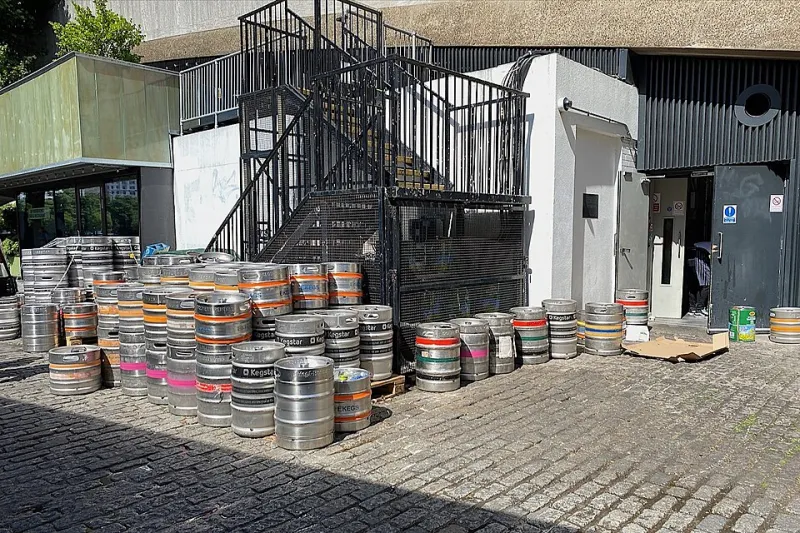
Photo: Robin Stott , CC BY-SA 2.0, via Wikimedia Commons
For UK media producers, an award letter is a funding milestone, not a supply-chain guarantee. A critical post house, equipment provider or freelance specialist can enter administration between one drawdown and the next. When that happens, the immediate task is operational: secure rushes, retrieve assets, find a replacement and keep the production moving. The parallel task is grant compliance. The instinct to substitute quietly and carry on can turn a manageable supplier failure into a funding breach. This article sets out a practical route through the first weeks, with the evidence a UK funder is likely to expect.
The First 72 Hours: Establish the Facts
Begin with verifiable information. Check Companies House and The Gazette for notices, confirm whether the supplier is in administration, liquidation or another insolvency process, and identify the administrator if one has been appointed. Do not rely on informal messages alone. Confirm which contracts, purchase orders, deliverables, assets and payments are affected.
Read the grant agreement before sending a substantive update. Most UK media grants contain a material change or notification clause. A critical supplier failure may trigger a duty to inform the funder within a set period, or to seek written consent before changing the delivery plan. Even where no express duty applies, early notification is usually prudent. The first message should be short and factual: what has happened, what is known, what is not yet known, and when a fuller mitigation plan will follow. Avoid speculation about blame or recovery.
Notification Is a Grant Condition, Not a Confession
Funders distinguish between a problem that is disclosed promptly and a problem that emerges at audit. The former is a governance issue; the latter can look like misrepresentation. A notification should not read as an apology for the production. It should read as a controlled update from an awardee that understands its obligations.
Set out the affected budget lines, the delivery milestones at risk and the options under consideration. If the supplier held production assets, master files or equipment on hire, explain how access will be secured. If the supplier was a sole trader or freelancer, confirm whether a handover can be arranged and whether intellectual property or confidentiality terms survive the insolvency. Ask the funder whether it requires a formal variation request or simply written acknowledgement of the revised plan. Record the answer.
Re-Procurement Evidence: Show That the Market Was Tested
Replacing a failed supplier is not simply a matter of finding the nearest available alternative. Funders, particularly those administering public money, will expect evidence that the replacement represents value for money and that the original grant budget has not been used to gold-plate the revised plan.
Where time allows, obtain at least three comparable quotes. Where emergency circumstances make that impractical, document why. A single-source justification should explain the deadline, the technical requirement, the availability of alternatives and the steps taken to test the market. Keep the scope of work comparable: a replacement post house quoting for a different deliverable set is not a like-for-like comparison. Record any conflict-of-interest checks, particularly where the replacement is connected to a member of the production team.
If the original supplier was procured under a funder-approved process, check whether the replacement must follow the same process or whether a simplified route is permitted. Do not assume that a lower headline price is automatically acceptable if it changes the specification, delivery date or rights position.
Contingency Language: Check Before You Spend
Many grant budgets contain a contingency line, but a contingency line is not a discretionary fund. It is usually subject to the same approval and evidence requirements as any other heading. Before drawing on it, confirm whether the funder requires prior written consent, whether the contingency can be reallocated to a different cost category, and whether the change affects the total award or matching-fund calculations.
If the grant has no contingency, or if the contingency is insufficient, prepare a variation request rather than moving costs silently between headings. Attach a revised budget and cashflow showing the original award, the proposed change and any additional cost to be met from other sources. Where the production has multiple funders, check whether the change affects their separate approvals. A supplier failure that is handled well with one funder can still create a compliance problem if another funder is left out of the loop.
Insurance and Recovery: Run the Commercial Route in Parallel
Grant funding is not a substitute for commercial recovery. Check whether the production has insolvency cover, credit insurance, a completion bond or contractual remedies such as retention, set-off or escrow. Notify insurers promptly and keep grant-related correspondence separate from insurance claims. Do not offset an expected insurance recovery against grant expenditure unless the funder has agreed the treatment in writing.
Where the supplier held intellectual property, rushes or masters, establish the legal position before assuming access. Insolvency practitioners have duties to creditors, and assets may be subject to retention of title or other claims. Take advice where necessary. The grant relationship is important, but it does not override the production's other contractual obligations.
The Audit Trail: A File That Tells the Truth
A well-managed supplier failure produces a clean audit trail. Keep the insolvency notice, dated correspondence with the funder, the impact assessment, revised schedule, quotes, approval emails, invoices, timesheets and delivery evidence in one place. Use consistent references between the budget, the variation request and the accounting records. If a freelancer is replaced, record the handover of materials and the basis on which the replacement was engaged.
The test is not whether the file looks flawless. The test is whether a third party can follow the decision from problem to approval to delivery. Funders expect problems. They do not expect surprises.
A Checklist for Protecting the Relationship
- Read the material change and notification clauses in the grant agreement.
- Confirm the insolvency process and the appointed practitioner.
- Notify the funder in writing within the required period.
- Send a one-page impact and mitigation note.
- Obtain written consent before reallocating budget or changing delivery.
- Keep three quotes or a documented single-source justification.
- Update the budget, cashflow and delivery schedule.
- Check insurance, contract remedies and asset access.
- Record handover, rights and confidentiality positions.
- Schedule a follow-up date and confirm the funder's response.
A supplier failure is a governance test as much as a production crisis. Transparent notification, tested re-procurement and a documented audit trail will not make the problem disappear, but they will protect the award relationship and the producer's reputation when the file is reviewed.